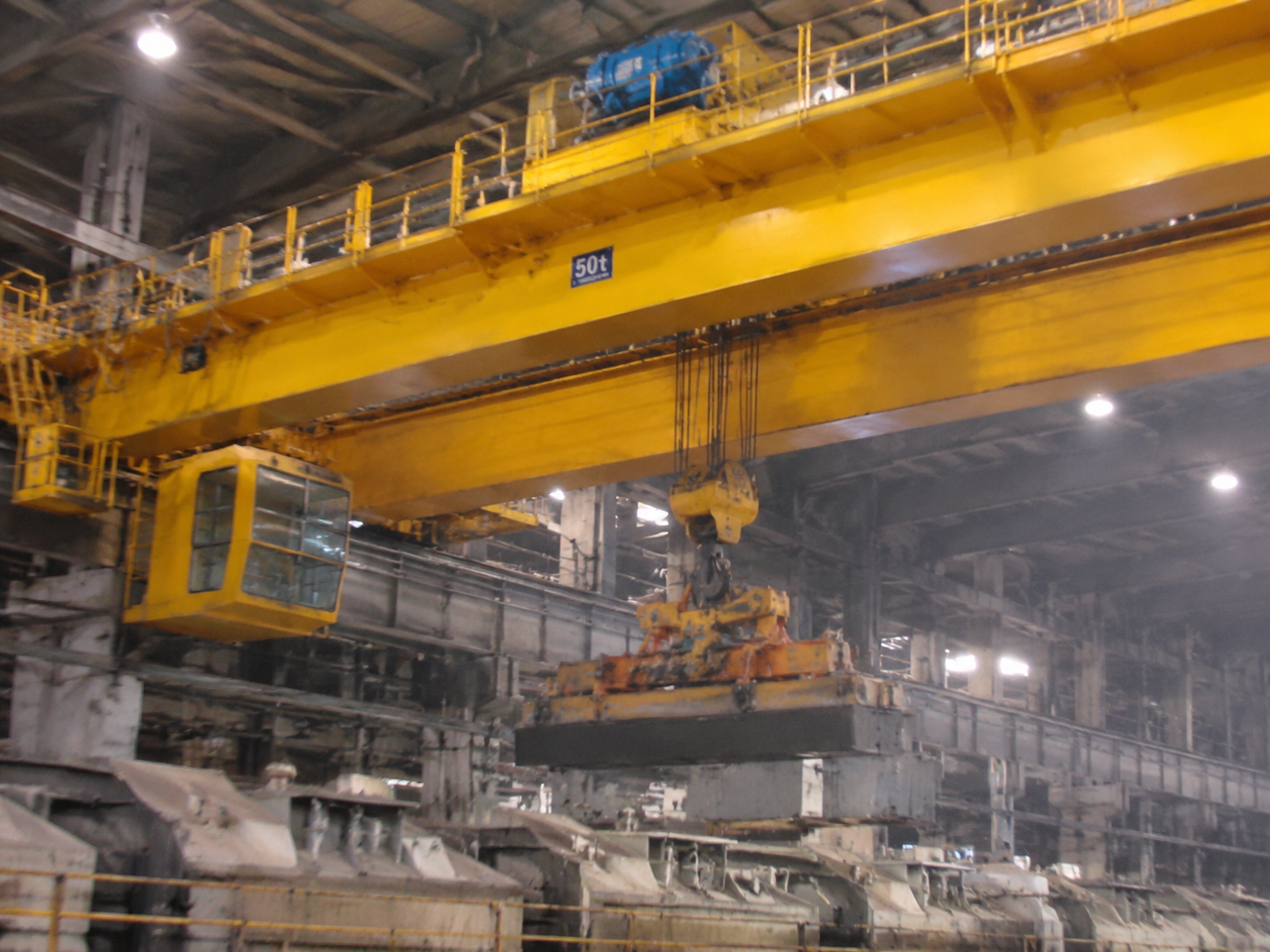
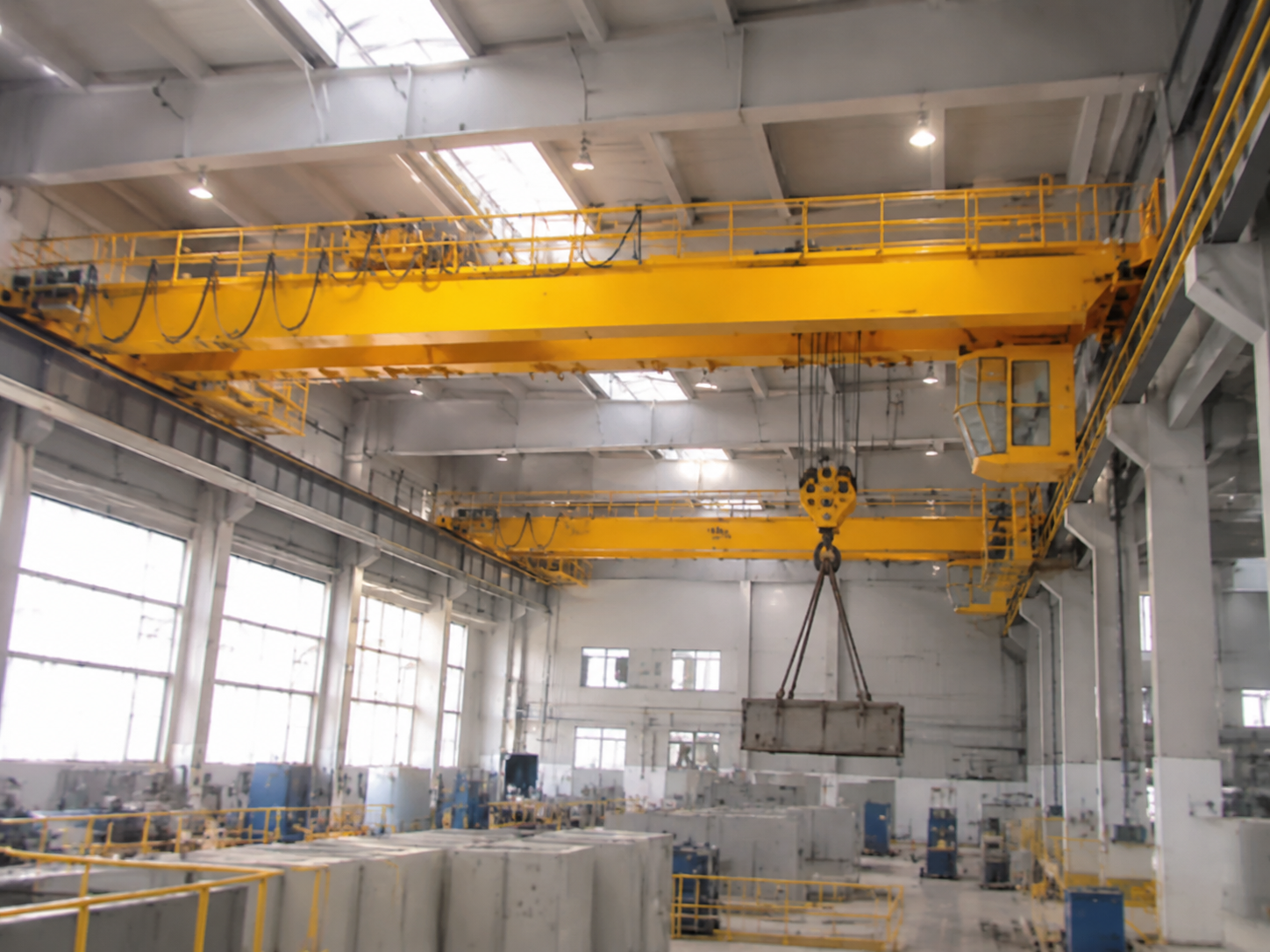
The Insulated Double Girder Travelling Crane is a specialized lifting solution designed for electrical environments where stray currents, potential differences, or the risk of current conduction may be present. Typical applications include aluminum electrolysis plants, substations, and non-ferrous metal electrolysis and smelting workshops.
This crane is designed and manufactured in accordance with the relevant requirements of GB/T 14405-2011 Overhead Travelling Crane and JB/T 8907-2013 Insulated Overhead Crane. For export projects, the design and configuration can also refer to applicable IEC and EN standards based on the target market and the customer's requirements.
Comparison |
Standard Double Girder Overhead Crane |
Insulated Double Girder Travelling Crane |
Working Conditions |
General industrial workshops without specific stray-current or electrical leakage risks, such as machining workshops, warehouses, and steel structure workshops. |
Special electrical environments with DC stray currents or energized electrolysis processes, such as aluminum, copper, magnesium, lead, and zinc electrolysis or smelting workshops, lithium battery electrolysis facilities, and high-voltage electrical maintenance workshops. |
Main Structure |
Mainly consists of main girders, travelling mechanisms, and hoisting mechanisms. |
Retains the basic double girder crane structure, with multi-point insulation components installed at selected connections to interrupt potential conductive paths. |
Customization |
Basic parameters such as span, lifting capacity, lifting height, and travelling speed can be customized. |
In addition to basic parameters, insulation materials, insulation levels, and insulation structures can be customized according to project requirements. |
Safety Focus |
Mainly focuses on mechanical lifting safety and general electrical safety. Special stray-current isolation is not normally part of the design. |
Gives additional attention to electrical insulation protection while meeting the required lifting safety requirements. |
Insulation Design |
No dedicated insulation components are normally installed. |
Insulation components can be installed at three key connections: between the hook assembly and moving pulley block, between the hoisting mechanism and trolley frame, and between the trolley frame and main girder. |
Consideration of Current Conduction Paths |
The mechanical and electrical design is generally based on conventional industrial working conditions. |
The design takes into account potential current conduction paths between the hook assembly, pulley block, hoisting mechanism, trolley frame, and main girder. |
Cost |
Under the same basic parameters and configuration, no additional cost for a dedicated insulation structure is normally required. |
Additional insulation components, materials, and design work are required. The actual cost depends on the insulation requirements and customized solution. |
Maintenance Focus |
Mainly involves checking the mechanical transmission system, brakes, electrical system, and structural connections. |
In addition to routine maintenance, insulation components should be checked for damage, aging, looseness, and contamination. |
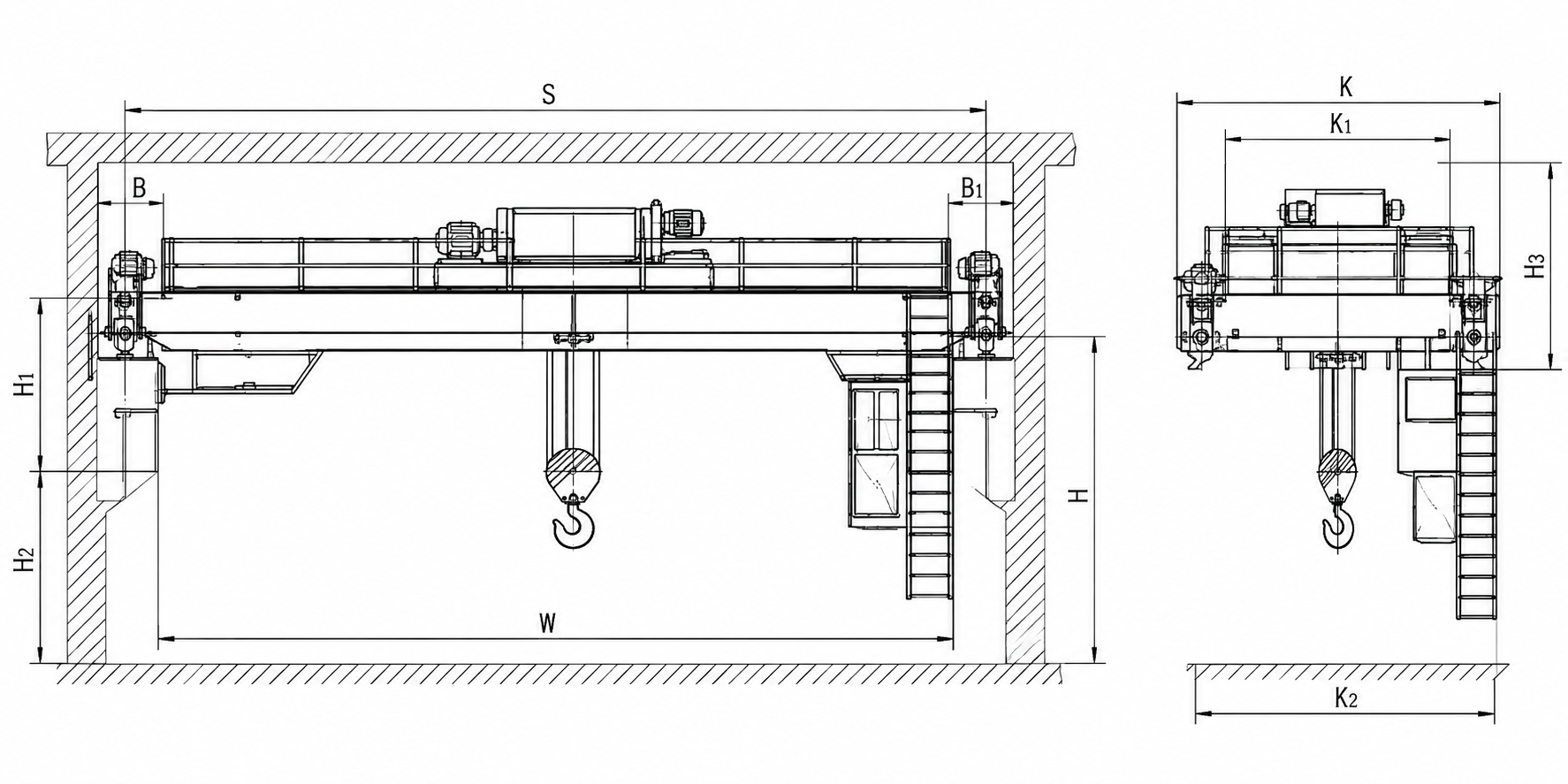
Design Drawings
Why Does an Insulated Crane Need Multiple Insulation Points?
As mentioned in the comparison table above, an insulated double girder overhead crane normally has insulation devices installed at three key connections: between the hook assembly and moving pulley block, between the hoisting mechanism and trolley frame, and between the trolley frame and main girder.
Why are multiple insulation points needed?
A crane consists of many metal components, including the hook assembly, pulley block, hoisting mechanism, trolley frame, and main girder. These components have different mechanical connections and may form different current conduction paths. Installing an insulation structure at only one location may not be enough to meet the insulation requirements of the entire crane.
For example, if insulation is provided at only one location, the insulation plate may become contaminated by dust or lose its insulation performance for other reasons. Once the insulation fails, a previously isolated conductive path may become connected again, increasing the risk of current conduction, electrical leakage, or arcing. In special environments where flammable gases or combustible dust are present, an electrical arc may also become an ignition source, potentially causing a fire or explosion. This can lead to equipment damage and put personnel at risk.
Therefore, multi-point insulation design is important. The insulation structure should be arranged at multiple key connections according to the crane's overall structure and the electrical conditions at the site, helping reduce the risk of current conduction.
Why Choose an Insulated Double Girder Travelling Crane?
Reduce the Risk of Current Conduction
In energized electrolysis environments, such as aluminum and copper electrolysis workshops, crane structures with multiple metal connections may be exposed to stray currents and potential differences. Without suitable insulation protection, current may pass through metal components and cause electrical damage or equipment failure.
The three-point insulation structure helps interrupt potential conductive paths at key connections, reducing the risk of current conduction and related electrical hazards.
Keep Overall Operating Costs Under Control
Although the purchase cost of an insulated double girder travelling crane may be higher than that of a standard double girder overhead crane with the same basic parameters, its insulation design can help reduce the risk of electrical leakage, fire, equipment short circuits, and unexpected production interruptions.
By reducing the likelihood of these problems, the crane may help control potential maintenance expenses and production losses over its service life.
Protect Operating Personnel
In special electrical environments where induced voltage or stray current may be present, the insulation design helps reduce the risk of current conduction through the trolley frame and operating area. This lowers the possibility of electric shock when operators come into contact with metal parts of the crane.
According to project requirements, additional insulation protection can also be provided for the operator's cab and related operating areas to further improve operational safety.


 Hook Double Girder Overhead Crane